KAIA PRESS™
Feature 1: Amateur Archaeology of SM’s Civilisation
[Article No.1] THE DETERIORATING MORAL OF LEE** S** M** HAS ALREADY DATED BACK TO THE BEGINNING OF THE IDOL SYSTEM - THE MISTREATMENT OF H.O.T
(TW: mentions of mental health issues, suicide, violence, etc.)
For those who support Lee S** M** and are hoping for his return as some kind of revival for SM/the K-pop industry: a genius with a gifted mind can still be an immoral bastard, and he already has been, even toward the people who helped him build his powerful empire from the very beginning.

For context, H.O.T debuted in 1996. They were the first idol group (in terms of the mainstream idol system, not just any Korean group in general) and quickly became pioneers of the Korean music industry at the time, achieving unprecedented accomplishments and having massive influence, whether in the 90s or even by today’s standards. Some call H.O.T the “great-grandfather” of K-pop, they wouldn’t be wrong. And the truth is, without H.O.T, there would be no SM Entertainment. H.O.T disbanded in 2001: three out of five members left and formed jtL (Jang Woo-hyuk, Tony An, Lee Jae-won), while two stayed and went solo (Kangta, Moon Hee-jun).
So for pioneers like them, their relationship with Lee Soo Man must have been closer, less oppressive than what later artists experienced, right? Unfortunately, the answer is no. Every single member, including Kangta, who is still at SM to this day, was mistreated and abused. No one was an exception.
The group debuted in 1996. At that time, under Korean law, all of them were still minors. Specifically: Moon Hee-jun, Jang Woo-hyuk, and Tony An were 18 (b.1978); Kangta was 16 (turning 17 in October) (b.1979); Lee Jae-won was 16 (b.1980). That means when they auditioned and began training, they were even younger. There’s no need to elaborate too much on the issue of minors entering the labor market before fully developing, that’s obvious enough, and most people understand that now. And it had an even greater impact because H.O.T became successful very early on; the pressures and responsibilities came before they were truly ready to handle them.
But ready or not, they still had to stand there and endure it.
So what exactly did Lee S** M** do? A lot, and what’s listed below is only a fraction of what he actually did.
Moon Hee-jun

Hee-jun was the eldest and the leader of H.O.T, meaning the one who had to bear the greatest responsibility, sometimes solely, for all issues related to the group, whether collective or individual, all while already struggling with his mental health. Just to add more, after H.O.T debuted and started making money, Hee-jun basically became the pillar of his family because once his father saw that his son was earning, he quietly left.
Despite contributing immensely and being the backbone of H.O.T, Moon Hee-jun was heavily discredited (which doesn’t mean he was invisible, he was one of the most famous idols of his time, even long after disbandment) and faced one of the biggest waves of anti-fans. Of course, SM had no proper measures to protect their artist from that. Some people believe SM must have treated him well since he was one of the two members who stayed after disbandment. But fun fact: Hee-jun later had to use his own money and fan funds to produce his solo album while still under SM.
He eventually left the company, but the anti-fans remained, and they still pop up even now to mock Moon Hee-jun.
Jang Woo-hyuk
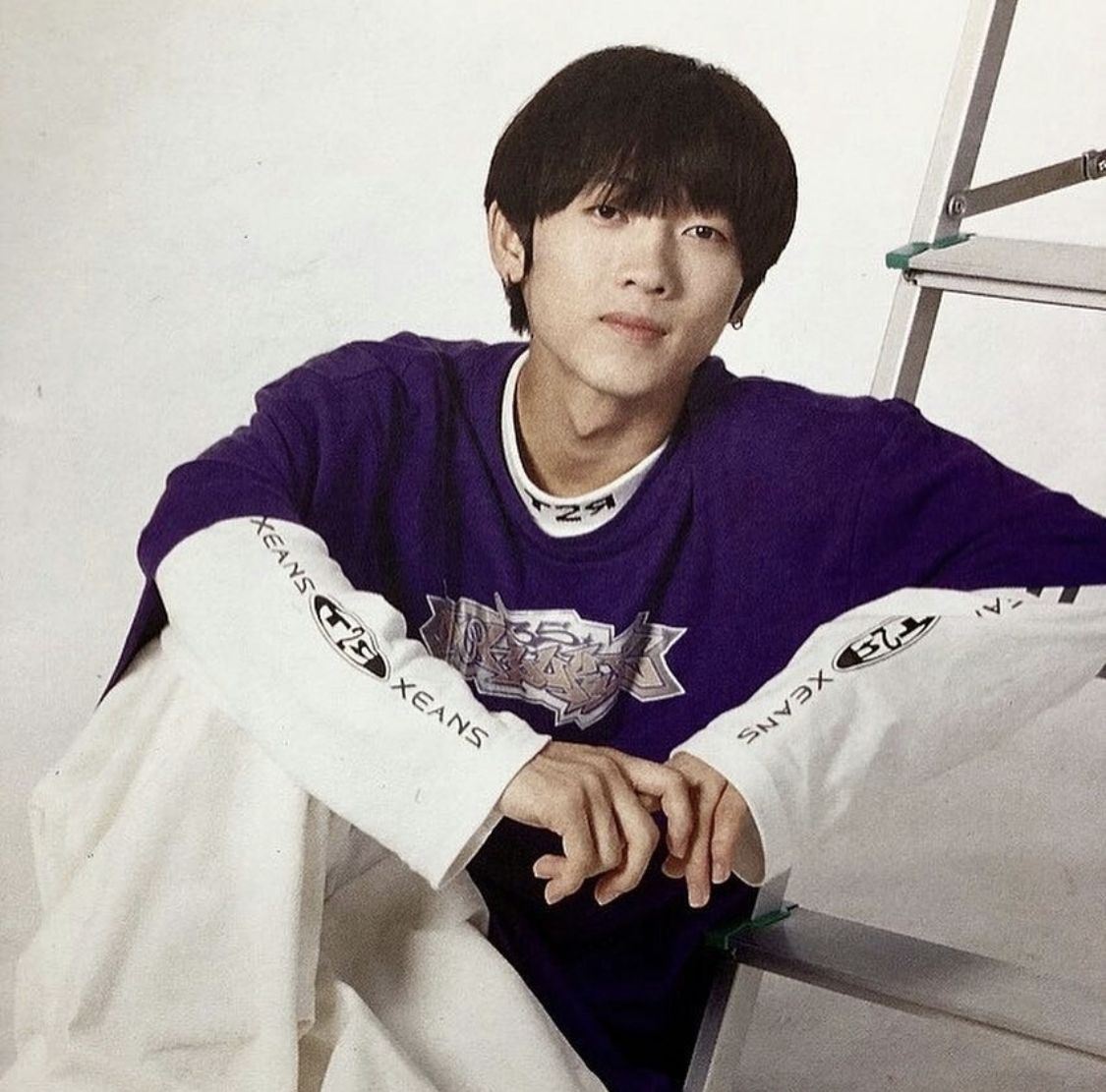
The one Lee S** M** favored the most in the early days, but a tyrant’s love is never simple.
Throughout H.O.T’s career, Jang Woo-hyuk was famous (or even infamous) for his strong image: aggressive, irritable, hot-tempered, use whatever word you want. And that image was encouraged by SM. You could say SM “indulged” him and allowed him to act however he wanted.
But looking closer, Jang Woo-hyuk most likely had anger issues or related problems. Considering his background (he was bullied as a child and had to resort to violence to defend himself, and he had a very bad relationship with his father), that assumption becomes even stronger.
Instead of acknowledging this and seeking ways to help, Lee S** M** encouraged the symptoms. Even if Korean society at the time didn’t value mental health, especially for minors (and honestly, it still doesn’t much now), what kind of normal adult tells a kid the age of their own children to be as aggressive as possible?
SM did exactly that. The result was a Jang Woo-hyuk who often lost control of his anger, from conflicts with fellow H.O.T members (especially Moon Hee-jun) to later allegations of assaulting trainees.
And Jang Woo-hyuk was among those who left the company over unfair profit distribution, he’s the “j” in jtL.
Tony An
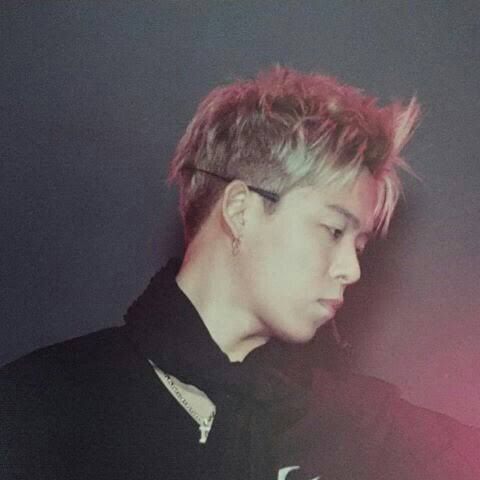
Tony had had severe mental health issues dating back to when he was in the U.S., but once again, SM stuck to its principle of “not giving a damn.”
Tony’s story is long and shouldn’t be simplified, but briefly: when he debuted at 18, his background already included divorced parents, his father remarried multiple times (one of the reasons Tony later felt reluctant about marriage), he had suicidal tendencies, and was even once considered for removal from the group.
After debut, things didn’t get better, they got worse. Tony has publicly spoken about how terrible he felt throughout his time in H.O.T. He frequently had mental episodes, but they were always simplified as laziness.
For example, once when the group was preparing to leave for the airport to fly to China for a schedule, everyone else was awake but Tony stayed stubbornly in bed, unable to get up because he was going through an episode. No matter what the members did, he wouldn’t move. The staff’s solution? Threaten to kick him out of the group.
There’s much more, but it’s not appropriate to lay everything out here. Tony An was the next one to leave, the “t” in jtL.
Kangta
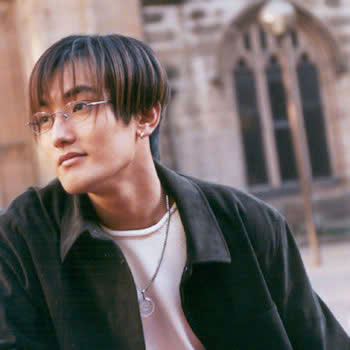
The only one still at SM, but that doesn’t mean he was safe.
Shortly, Kangta was heavily sexualized from the time he was still a minor, by company strategy, by the media, and by fans. He had both talent and visuals and was considered the standard for vocal skill and the “original template” for SM’s visual title. Yet more than anything, people fixated on calling him “sexy” (“sexy guy is Kangta!”).
So what happens to a teenage boy who is nationally labeled and endlessly hyped as “sexy” from age 16–17?
Kangta didn’t become rotten to the core. He still has decent qualities and a sensitive artist’s soul. He has a very large ego. He’s not exactly the kind of superior who respects your personal boundaries at work. His difficulty isn’t just perfectionism, it goes beyond that (BoA once recounted about his utmost difficulty during recording sections, to the point it made her cry). He was also known as a womanizer, though he seems more settled with his current partner now.
Lee Jae-won
The youngest. The most forgotten. The one who perhaps wasn’t hit the hardest blow by SM, but was stabbed slowly, little by little, left to ache every day.
Lee Jae-won was heavily overshadowed, his role nearly reduced to filling out the lineup or attracting fans who liked the “innocent boy” image. He wasn’t truly ready to be an idol at debut. He failed badly in his auditions before passing (because of fear, pressure,...), but Lee S** M** let him through due to his “potential”.
You’d think if L** S** M** personally chose him, he’d at least be treated well and properly developed. But no. Jae-won was rarely given singing lines during H.O.T’s era, often placed at the edge of performance formations (though to be fair, at the time his dancing wasn’t as strong as the others).
He was likely restricted not only in singing and dancing but also in personality. He was labeled the group’s “shy guy,” the quiet maknae who often faded into the background, introverted, unremarkable, unimportant..
But perhaps Jae-won’s silence in H.O.T was a withdrawn silence. How can a child who hadn’t fully matured, still shaken by the loss of a loved one, dealing with autism, comfortably express himself in a world spinning too fast, where all attention was already focused on his older members?
But maybe one positive thing: after leaving SM with Tony and Woo-hyuk to complete jtL as the “L,” he seemed far more confident, both on stage and off.
jtL
This isn’t speculation. Even Korean media and netizens acknowledged that Lee S** M** quietly blacklisted jtL after their debut, restricting their promotional activities and making things extremely difficult.
Despite that, jtL was still very successful. Their debut album “Enter The Dragon” had multiple hits, maintained a large fanbase, and even entered the Chinese market during their three to four active years (2001–2004; no official disbandment, but they stopped activities).
Does this storyline sound familiar? Perhaps it happened again, maybe in 2010?
H.O.T
As trainees, all of them were starved (essentially put through harsh, almost military-like discipline). Even once when Tony accidentally ordered food beyond budget, something fancier than jajangmyeon (black bean sauce noodles) (Lee Jae-won mentioned the story about that dish again on a YouTube show by Hyun Jin-young), Lee S** M** severely lectured them. That likely contributed to H.O.T’s scrawny builds during rookie days.
Along that, of course, there was labor exploitation, the kind every idol has experienced.
Closing note
That’s probably enough. Digging deeper would make this far too long. But even this much should be enough for anyone with average awareness to understand just how morally deteriorating Lee S** M** has been since the very beginning. There’s no adequate explanation, and certainly no justification that can savour his choices and actions, whether toward H.O.T or any other artist he trampled on.
Any support for him is support for that very rot.
End.
Feature 2: Thinkpieces
We can never achieve the ideal world we can dream of?
Even when we make the changes. Because beside the dreamers and changers of this world always lies the plaguey existence of those who thrive on the instability of humanity. Power can only be performed when there are the powerless, and there are no virtues strong enough standing up to greed.
And apathy…
But again, the hopelessness in the bigger picture shall not neutralise empathy to apathy. Apathy is the weapon that can be just as destructive as any weapon. And apathy is what they want from us, apathy is a disease that ruins lives. The ability to resist apathy draws the line between a human and a tool.